Guides
Ghost Kitchen Startup: Four Decisions to Make
A ghost kitchen startup turns on four choices—kitchen, menu, platforms, and radius—plus contribution math, permit questions, staffing, and a stop rule.
What to take away
- A ghost kitchen startup is a restaurant with no dining room whose storefront is a listing inside somebody else's app. Every other decision follows from accepting that.
- Four choices fix the restwhere you cook, what travels, which platforms carry you, and how far you deliver. Make them in that order and write them down before you sign anything.
- The platform commission is usually the largest single line, and it comes off gross, not off profit. Price and portion with that subtraction already made.
- Rent a kitchen by the hour before you fit one out. The hourly kitchen is a paid experiment; the fitted-out kitchen is a bet.
- No national answer exists for permits, tax, or platform terms. Your local health department, your state revenue department, and each platform's current terms decide, and this guide tells you what to ask each of them.
Someone opening a ghost kitchen is opening a restaurant whose customers never see the room, never meet the cook, and judge the food twenty minutes after it left the pass. That changes what a menu is, what a location is, and what a good night looks like.
It does not change the fact that a retail food business answers to whichever agency inspects kitchens where it stands, so nothing here can tell you what your county requires. It can tell you which questions decide the business.
The four decisions that fix everything else
Most first-time operators start with the food. Start instead with the four constraints the food will have to live inside.
Four decisions before you start
- Kitchencommissary, shared bay, sublet, or own space
- Menudishes that survive the bag
- Platformscommission, ranking, tablet per app
- Radiuswhat food tolerates and order density
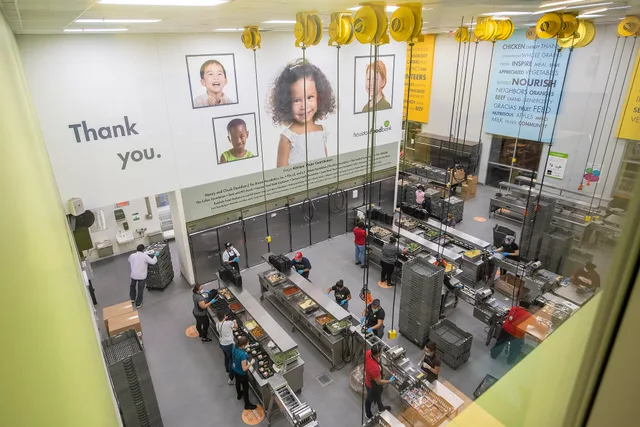
- The kitchen. You can rent hours in a licensed commissary, lease a unit inside a facility run by a shared-kitchen operator, sublet dead hours from an existing restaurant, or fit out your own space. Each carries a different fixed cost, a different permit path, and a different answer to "what happens if this fails".
- The menu. Delivery-only food has to survive a closed container, a hot car or an insulated bag, and a wait you do not control. A dish that is wonderful on a plate and limp in a box is not on the menu, however much you like cooking it.
- The platforms. Each marketplace app is a storefront with its own commission structure, its own ranking behavior, and its own tablet on your counter. Your own ordering channel pays no commission and brings no traffic on its own.
- The radius. The circle you deliver into is set by what the food can tolerate in transit and by how dense the orders are inside it. A wide radius adds cold food and late orders faster than it adds customers.
Write one paragraph on each before you look at a lease or a supplier list. The rest of this guide takes them in turn.
Kitchen models compared
Fixed commitment
- Hourly commissary
- Hours booked, often weekly
- Unit in a shared-kitchen facility
- Monthly license or lease on a private bay
- Sublet hours in an existing restaurant
- An agreement with the host restaurant
- Your own fitted-out space
- Lease plus buildout
Who holds the food permit
- Hourly commissary
- Usually the facility, with you registered as a user; confirm locally
- Unit in a shared-kitchen facility
- Varies; the facility may hold the building approvals and you the operator permit
- Sublet hours in an existing restaurant
- The host, plus whatever your health department requires of you
- Your own fitted-out space
- You, from the ground up
What it tests
- Hourly commissary
- Whether anyone orders your food at all
- Unit in a shared-kitchen facility
- Whether one brand can fill a bay
- Sublet hours in an existing restaurant
- A second brand out of idle equipment
- Your own fitted-out space
- A proven concept at scale
Where it breaks
- Hourly commissary
- Peak-hour slots sell out; your gear travels in and out
- Unit in a shared-kitchen facility
- Facility fees stack on top of platform commission
- Sublet hours in an existing restaurant
- Host's service comes first; storage and labeling disputes
- Your own fitted-out space
- Buildout runs long; you carry every fixed cost alone
The order in the table is the order most operators should move through them. The point of the hourly commissary is not that it is cheap. It is that it converts the largest unknown, whether the food sells in this radius at this price, into a few weeks of booked hours instead of a lease.
Kitchen models compared
Hourly commissary
- Fixed commitment
- Hours booked
- Permit holder
- Facility
- What it tests
- If anyone orders
- Where it breaks
- Peak slots sell out
Shared-kitchen unit
- Fixed commitment
- Monthly license
- Permit holder
- Varies
- What it tests
- One brand fills bay
- Where it breaks
- Fees stack
Sublet restaurant hours
- Fixed commitment
- Agreement with host
- Permit holder
- Host
- What it tests
- Second brand
- Where it breaks
- Host comes first
Own fitted-out space
- Fixed commitment
- Lease plus buildout
- Permit holder
- You
- What it tests
- Concept at scale
- Where it breaks
- Buildout runs long
The menu is engineered for the bag
A delivery menu is a short list of dishes that arrive well. Build it by testing, not by taste alone.
Engineered for the bag
- Pack each candidate dish exactly as a customer would receive it, leave it sealed for the longest transit you expect, then open and eat it. Fried items steam themselves soft in a closed lid; sauced items pool; anything that depends on contrast between hot and cold loses the contrast.
- Design the container per dishvented lids for fried food, sauce on the side for anything that would soak, a separate compartment for anything crisp. Packaging is a food-quality decision before it is a cost decision.
- Keep the count small. Every dish on the menu is a line in the walk-in, a prep task, and a way to run out on a Friday night.
- Design for multiple brands out of one kitchen only after one brand works. A second brand should share most of its prep list with the first; if it needs its own walk-in it is a second restaurant.
The commission comes off gross
Write the per-order arithmetic in named variables before you set a single price, and keep it on the wall.
Per-order contribution arithmetic
- P: menu price customer pays
- c: platform commission rate
- f: per-order platform fee
- Revenue = P x (1 - c) - f
- Subtract food F, packaging K, labor L
- Contribution = P x (1 - c) - f - F - K - L
- Let P be the menu price the customer pays for an order, c the platform's commission rate on that order under its current terms, and f any per-order fee the platform charges you.
- Your receipt from the platform for that order is P × (1 - c) - f. That number, not P, is your revenue.
- Subtract food cost F, packaging K, and the labor minutes the order consumed at your loaded hourly cost, L. What is left, P × (1 - c) - f - F - K - L, is the contribution of one order.
- Contribution times orders per hour at the peak is what the kitchen actually earns while it is busy. If that product does not cover the hours when nobody orders, the concept does not work at that price on that platform.
For examples, DoorDash delivery commissions range from 15%-30%, depending on plan, and its self-delivery commission is 8%-12%; Uber Eats charges a 15% marketplace fee when you use your own drivers and 15%-30% when it supplies delivery; Grubhub charges 5–20% for pickup and self-delivery, an additional 10% for Grubhub delivery, and up to 30% for marketing and delivery, according to published platform fee examples. Commission rates and fees are set by each platform and change; read the current terms for each service tier you sign up for rather than any number you find on a website, including this one. Some platforms offer lower commission tiers in exchange for less visibility. That is a real trade, and the arithmetic above is how you evaluate it.
The storefront is a rating and six photographs
In a ghost kitchen the app listing does the job the frontage and the dining room did.
The storefront
- Ratings are the storefront. A run of low ratings can drop a listing out of the default sort or, under some platforms' terms, suspend it, which removes an entire order stream at once. Confirm the thresholds in each platform's current policy.
- Photographs are the menu board. Shoot the food in the container it ships in, not on a plate.
- Peak-hour throughput is the capacity constraint nobody sees. One tablet per platform, each chirping, each with its own accept-and-ready flow, is where orders get lost. Decide who owns the tablets during a rush before the rush.
- Every platform runs its own refund and dispute process. A missing item or a cold order is refunded against you under their rules, so pack against a checklist and photograph anything that goes out on a complaint-prone order.
Who governs a ghost kitchen
Nobody issues a "ghost kitchen license". The business is regulated as retail food service, as an employer, and as a taxpayer, and each layer has its own authority.
Who governs a ghost kitchen
- FoodFDA state retail food codes directory
- TaxIRS Starting a Business pages
- Sales taxstate revenue department
- Everything elseSBA Business Guide
- Food. The U.S. Food and Drug Administration keeps a state-by-state directory of retail food codes and agencies. Use it to find which state or local body inspects kitchens where yours will stand, then ask that body directly what a delivery-only operation needs, what a shared facility's permits cover, and what stays with you.
- Tax and structure. The Internal Revenue Service's Starting a Business pages walk through choosing an entity, obtaining a tax identification number where one is required, and the recordkeeping that starts on day one. State sales tax on delivered food and on platform-collected orders is a question for your state revenue department.
- Everything else. The Small Business Administration's Business Guide organizes ownership into planning, launching, managing, and growing, with sections on market research, startup costs, permits, insurance, and hiring. It is a good map of what a general business owes; it is not a food-service authority.
The people, and the hours
The Bureau of Labor Statistics' profile of food service managers describes a role that covers staff, supplies, food preparation, sanitation, customer complaints, budgets, and payroll records, with schedules that often include nights, weekends, and holidays. In a ghost kitchen the manager also owns the tablets.
Delivery demand peaks at dinner and late at night, so the person who can run the pass during a Friday rush is the first hire that matters, and their availability sets your operating hours more than your ambition does.
Phasing the opening
Do not open the whole concept at once. Stage the opening as a test, with a stop rule before committing to more fixed costs; see the startup cost and funding guide.
Phasing the opening
- Phase oneone brand, hourly kitchen, one or two platforms
- Phase twoextend hours or radius, add own channel
- Phase threecommit to a bay or space, consider second brand
The stop rule is written before phase one begins: a contribution per order below what covers the idle hours, or a rating trend that keeps falling after packaging fixes, ends the experiment rather than justifying more spend.
What belongs elsewhere on this site
This guide fixes the frame. The step-by-step launch order gets its own article in this cluster. So do the document a lender or landlord will ask for, and the cost categories with the funding routes that fit each one. The pricing, licensing, site, and hiring guides go deeper on their subjects than a startup overview should.
Common questions
Do I need a ghost kitchen permit?
No such permit exists as a category. You need whatever your local health authority requires of a retail food operation in your facility type, plus business registration and tax accounts. Ask the agency the FDA directory points you to, and ask your facility operator in writing what their approvals cover.
Which platform should I start on?
Compare DoorDash, Uber Eats, and Grubhub against order density in your radius and the fee terms for your plan; choose the one whose arithmetic still leaves a contribution per order. The examples above are not a substitute for checking current terms.
Is a second brand a shortcut to more revenue?
Only when it shares the first brand's prep and sells into hours the first brand leaves idle. A second brand with its own ingredients doubles complexity for a share of the same delivery demand.
How small should the first radius be?
Small enough that the food arrives as you designed it. Grow it one step at a time and watch the ratings, because the radius that adds the most orders is often the one that starts the complaints.